
What does good skincare for acne look like?
The right skincare supports your acne treatment. How to choose suitable products and why less is often more.
Skin care4 min read
The right skincare is an important support for acne treatment. Cleansing with mild, moisturising washes and then caring for your skin with a cream or lotion that suits its needs helps calm irritated and inflamed skin and improve its appearance in the long run.
Excess sebum and keratin build-up lead to acne
The medical treatment of acne vulgaris, as the most common form of acne is called, depends on how severe the condition is and is carried out by a doctor. But alongside medical treatment, you can contribute to the success of your treatment yourself with a suitable skincare routine.
Excessive sebum production (seborrhoea) and increased production of keratin (hyperkeratosis) in the hair follicle canals play a key role in how acne develops. In the end, these processes clog the pores, and blackheads, papules and pustules form. These conditions are an ideal breeding ground for bacteria, and in particular Propionibacterium acnes (P. acnes), which is part of the skin's natural flora, multiplies strongly and promotes inflammation.
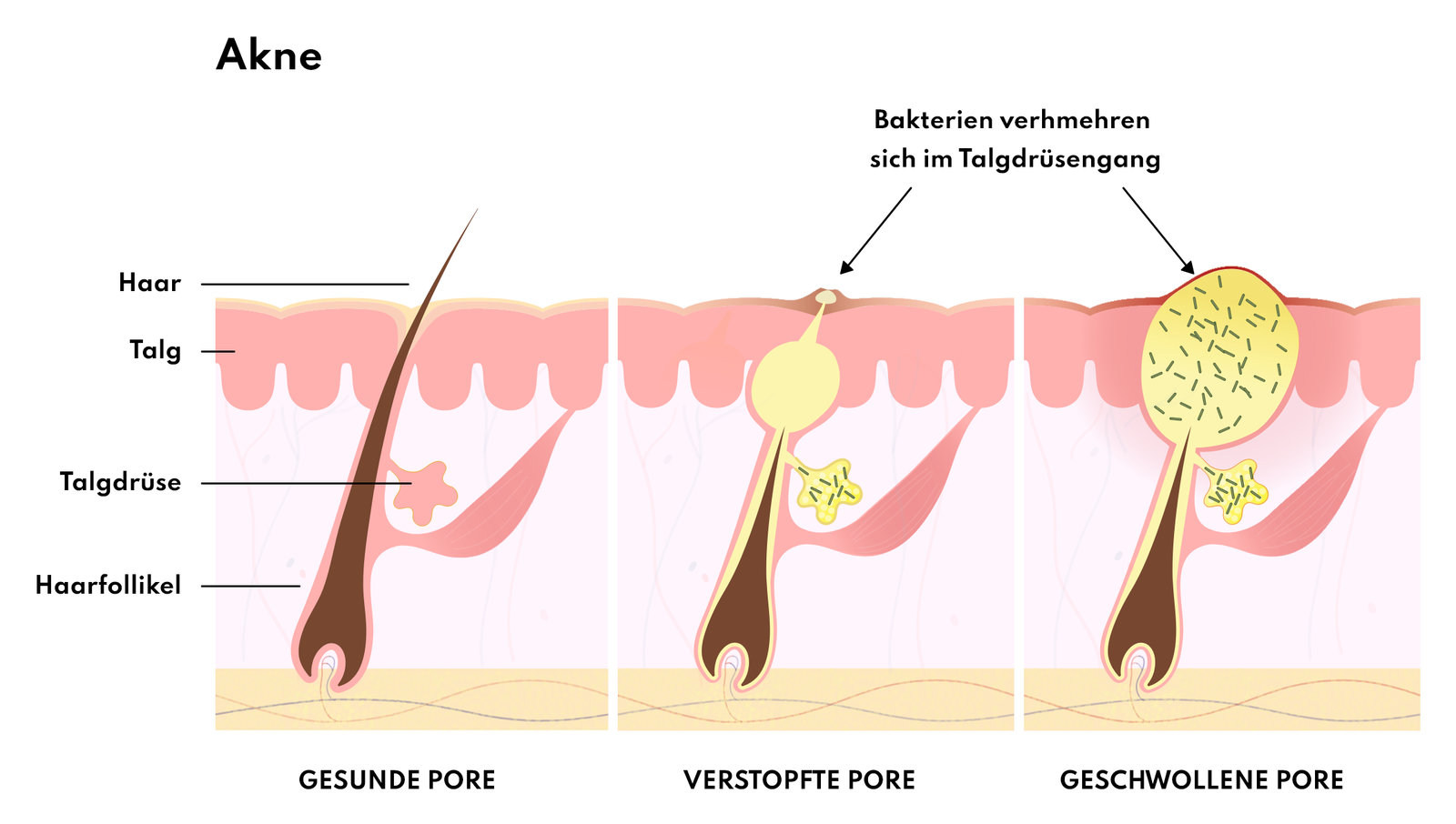
In acne, blemishes mainly appear on areas of skin with a particularly large number of sebaceous glands. Hormonal acne after puberty often shows up especially on the lower half of the face, on the cheeks and around the jaw. The neck, chest and upper back can also be affected. The acne appears as spots, pustules and blackheads. Cysts are also common: clogged pores that sit deep under the skin and sometimes form painful lumps on the surface.
Choosing the right skincare products
If you have acne-prone skin, it's best to avoid products that are very drying, perfumed or oily. Mild, non-irritating cleansing and skincare products are a better choice. The skin's natural pH (a measure of acidity) is 5.5. Normal soaps often have a pH of 8–10, which is higher than the skin's. So when you choose products, it makes sense to look for soaps and cleansing lotions labelled "pH-neutral" or "pH 5.5".
It's best to clean the affected areas once a day and after sport with a mild cleansing lotion. If you wash your skin too often or with harsh products, its natural protective barrier gets damaged and skin irritation can get worse.
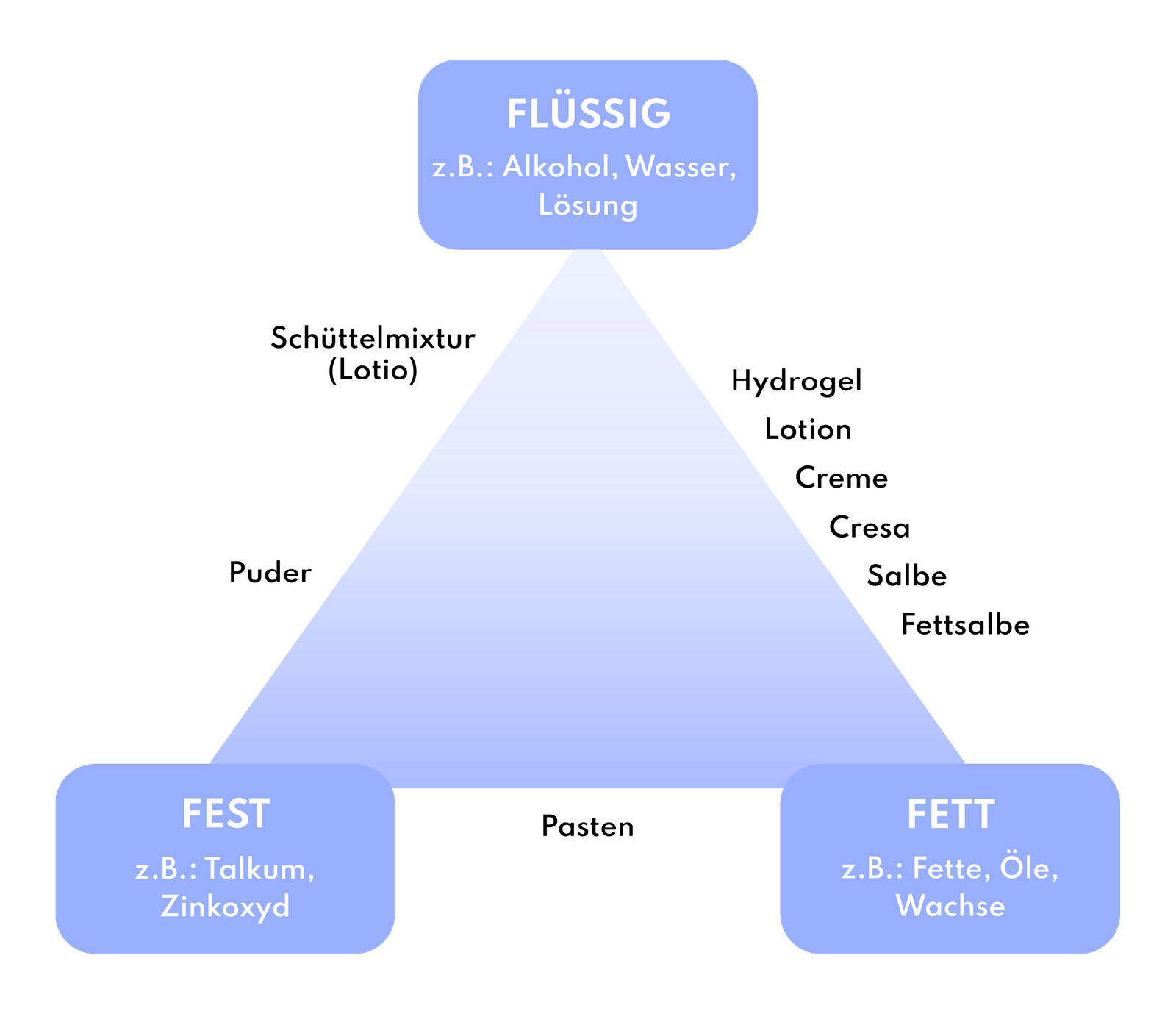
For the care step afterwards, moisturising creams or lotions with a high water content are a good choice. Creams like these, with more water than oil, are called oil-in-water emulsions; they spread easily and absorb quickly. Very greasy or oily products (water-in-oil emulsions) are best avoided, because they make clogged pores even more likely. Make-up or greasy sunscreens can also clog pores and make the problem worse. When you buy products, it's a good idea to choose ones that are as oil-free as possible.
Professional skin cleansing by trained staff
It's very tempting to take matters into your own hands and squeeze spots and pus-filled bumps. Still, you should resist the temptation. Squeezing can push the pus even deeper into the skin and lead to inflammation that reaches deeper layers. In the worst case, a scar can remain after it heals.
Important: never squeeze spots yourself, especially above the upper lip and around the nose and the corners of the eyes. The blood vessels in this so-called "danger triangle" are connected to the veins of the brain, and there is a risk of germs spreading and of blocked blood vessels (cerebral venous sinus thrombosis).
Some dermatologists and medical beauty salons offer professional skin cleansing, in which trained specialists open the spots under hygienic conditions and remove their contents. This treatment, also called an acne facial ("Aknetoilette" in German), can be a useful addition to treatment in severe cases and can take place once a week during acute phases.
During an acne facial, the skin is first softened with warm water or steam to open the pores. After that, the spots are easier to open, and the beautician treats the affected areas with sterile single-use needles. For severe acne, these treatments may be covered by German statutory health insurance (gesetzliche Krankenkasse).
Less is often more
For many patients, acne is a heavy burden. But with suitable treatment started in time, the symptoms can usually be brought under control and long-term damage such as scarring can be avoided. With the right skincare, you can support your treatment and boost your well-being.
Less is often more, and too many skincare products can sometimes do more harm than good. Acne has nothing to do with "dirty" skin or poor hygiene, and cleansing and caring for your skin too often or too harshly often makes the problem worse. It's best to talk to your doctor about what the ideal skincare looks like for you and which skincare products are suitable.